
Behaviour and learning
Note: The evidence in this behaviour section is not as secure as most of the rest of the advice on this site. Most of the rest is from meta-studies which combine the results on several classroom experiments.
The behaviour material is more anecdotal – more “this is what seems to work” than “this is what the experiments show”.
A number of different studies all show the importance of classroom behaviour:
- John Hattie’s research shows that poor behaviour can reduce the average academic achievement of the whole class by more than one GCSE or A Level grade.
- This report, led by ResearchED founder Tom Bennett, was produced for the UK government. It discusses how school leaders can optimise classroom behaviour in their schools.
- There is some useful information on behaviour management on the EEF website.
The environment for learning is just as important as the learning itself. There are hardly any examples of effective learning taking place within an environment of poor behaviour.
We’ve categorised the interventions into four groups: environment, teacher, structure, and whole school.
On this page we’ll have a look at each of these groups in more detail. At the bottom of the page you can find our table (right click and select “open image in new tab” to see a large-scale version).
The leadership of the whole school can influence behaviour, and impact on individual teachers, students, and classrooms.
The best way to tackle behaviour is to have a whole school approach, gaining a strong culture. An interesting source of evidence on how school leaders can optimise classroom behaviour in schools is a report led by ResearchED founder Tom Bennett, produced for the UK government.
He found that strong schools have visible leaders, high expectations of all students, clarity and consistency of routines and roles, staff are supported and not weighed down with unnecessary bureaucracy, staff are engaged and there is a real attention to detail.

Bennett’s report includes a lovely diagram to showcase some of the main barriers to improving behaviour.

Don’t try it all at once
Remember not to try lots of new techniques at the same time. Master one, get some constructive feedback (e.g. film yourself using a technique, ask a colleague to observe you specifically on the method you have chosen) and practice it until you are competent. Then move on to another method.
An interesting method is from Paul Bambrick-Santoyo who suggests that you should script responses, practice methods privately (e.g. to an experienced non-judgemental colleague and not in the classroom) before going live in the classroom.
Consistently receiving positive, yet constructive and specific feedback is proven to be an extremely effective way of improving teaching and behaviour management.
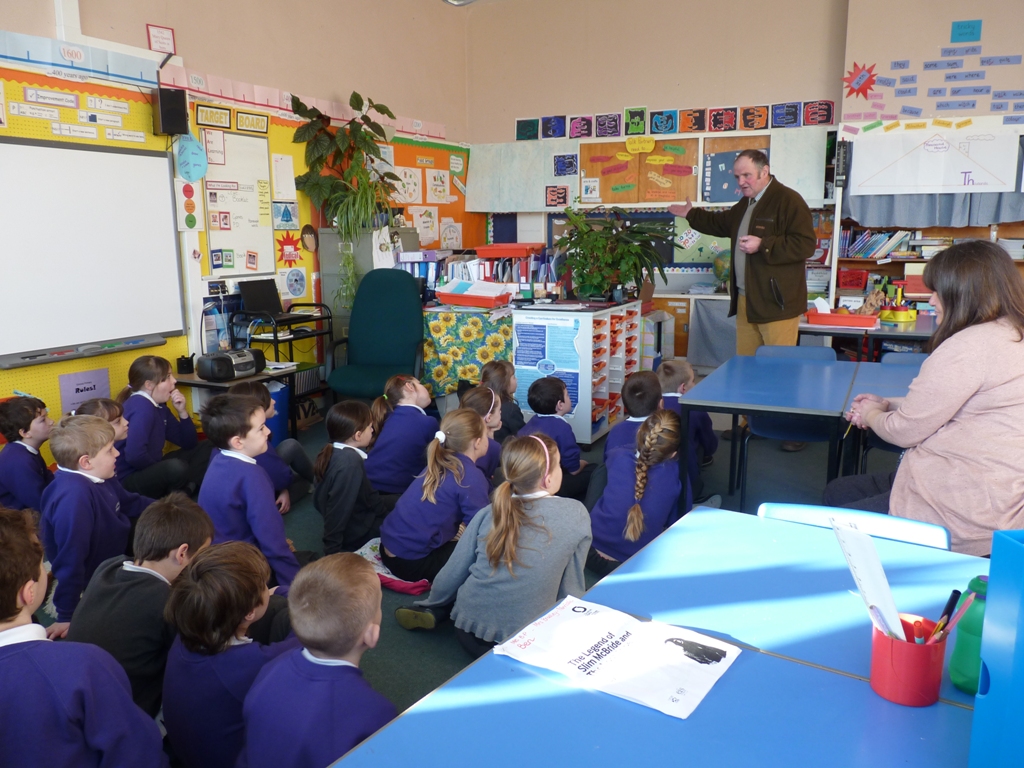
One aspect to consider is the suitability of the classroom in general and for each lesson. You might think about how you lay out the tables and chairs, for example.
Other factors include managing noise levels, and managing external distractions.
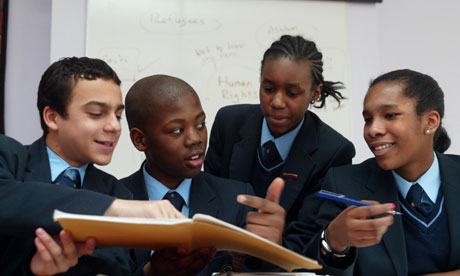
The relationship between the student and the teacher is an important element.
This includes how you acknowledge students, and how you reinforce positive behaviour and manage negative behaviour. Other aspects to reflect on include the language you use, the type of feedback you give, and the effectiveness of your instruction overall.
The responses of the adults in the room can impact on the responses of the students. This includes you as the teacher, the Teaching Assistant, and any other classroom support.
Narrate the positive – instead of focusing on the negative behaviour in the classroom, focus on the positive. In other words, commentate on what is going well.
For example, instead of “Joe, stop shouting out!” or “I’m really disappointed that some people aren’t standing behind their chairs!”
Try, “Fantastic, Damian! I really like that you’re not shouting out and you’re waiting patiently for your turn.” Or “I’m really proud of Chris, Jenny and Imran for standing so quietly behind their chairs.”
Tell them what to do – Don’t tell them what not to do! For example, instead of, “Katy, don’t swing on your chair and stop staring out of the window!” try, “Katy, sit down on your chair, please. I’d like to see you start you first sentence. Thank you.” Be specific, clear and concise about what you want. Using the word ‘thank you’ also shows respect and also the expectation that what you have asked for will happen.
Give options – “John, you can either sit down at your own seat, like I’ve asked, or you can sit next to me.”
“Amy, you can either start your work, or you can see Mrs Banks at playtime.” This allows for reflection time and gives the student the option of changing their behaviour.
Allow thinking time – Instead of shouting, try asking someone to come to you when they’re ready and then get on with something else. It really works! For example, “Poppy, come and have a chat, when you’re ready, please (Then get on with something until they’re ready).”
Praise in public, correct in private – when it comes to behaviour, you want to highlight the good things and not the bad. You may get a worse reaction if you chastise someone in public too as they may feel embarrassed and react in the wrong way.”
Be consistent – Make sure you agree rules at the start of the year (hopefully with a consistent school approach) and stick to them. Students need to see that there are boundaries and consequences to their actions, whether good or bad.
Use body-language and gesture – Often we can get a reluctant student to behave without using words (which they may argue with). For example: Instead of ‘Sally, take your coat off, you know the rules.’ Simply say “Sally” and when she looks, do the gesture of taking off your coat. (or put your finger to your mouth in a gesture of quiet if she was talking). Then turn away as this lowers the confrontation.

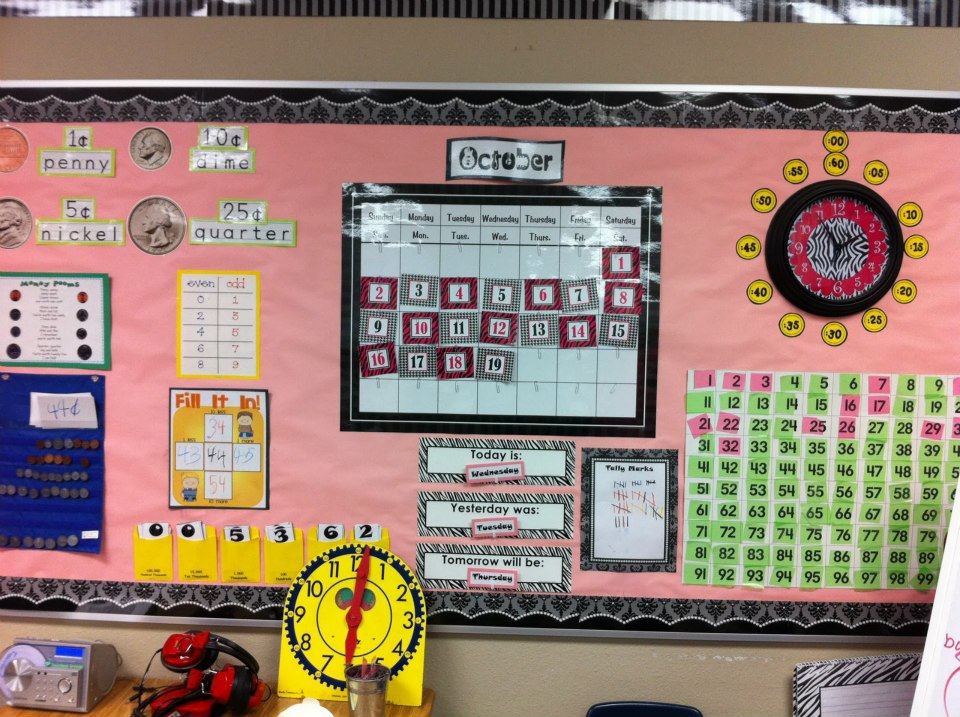
Structure has an impact on behaviour. This might include the structure of a lesson, the structure of the day, and the structure of the whole term or year.
It might also include daily routines in the classroom, as well as rules and expectations of the students.
When considering structure, it’s helpful to think about an appropriate pace within lessons. This will help you think about how much attention to give each task.
Our Six Steps to Outstanding Learning are useful when thinking about the flow of lessons and how much time to spend on each stage.
Routines – create strong routines for coming into the classroom (Do they have a task when they come in or are they twiddling their thumbs? Do they come in chatting or are they met at the door and come in quietly? Do they stand behind their chairs, do a task, sit somewhere or are they left to wander until everyone’s ready? Does everyone get out of their chair to get their books or is there a system where a select few give them out?) If a routine isn’t followed, train students to do it again until it’s exactly like you want it. It sounds simple, but make sure that everyone knows what is expected.
Structure – When considering structure, it’s helpful to think about an appropriate pace within lessons. This will help you think about how much attention to give each task.
Our Six Steps to Outstanding Learning are useful when thinking about the flow of lessons and how much time to spend on each stage.
Add knowledge – Using our six-step approach, make sure that you’re aware of where the student is (prior knowledge) and make sure you’re not giving them too much (cognitive overload). Once you find out that someone is showing poor behaviour because of their lack of confidence in their ability or lack of prior knowledge, you can work to add knowledge at the right level.
Get the students thinking – Make sure you focus on what you want the student to be learning. Stay on track and get there as efficiently as possible. If the student is attending to the right things, it makes life a lot easier and it will have a much higher impact on pupil outcomes.
Be a positive role-model – It sounds obvious, but act like you want the students to act. Experiments, such as the famous Albert Bandura’s (1977), showed that children copied behaviour, depending on whether they saw an adult being mean to a bobo doll or nice.

Further research
We’ve also looked at four other evidence-based sources and compiled a table to compare the results.
Column 1:
http://www.evidencebase dteaching.org.au/top-10-behaviour-management-
Column 2:
http://files.eric.ed.gov/fulltext/EJ976654.pdf
Column 3:
https://www.osepideasthatwork.org/evidencebasedclassroomstrategies/ClassroomPBIS_508.pdf
Column 4:
https://www.gov.uk/government/uploads/system/uploads/attachment_data/file/184078/DFE-RR218.pdf

Header image: http://www.wolverley.worcs.sch.uk/
Behaviour intro image: https://www.theguardian.com/news/datablog/2013/jan/24/secondary-school-league-tables-2012-data
Environment image: https://lochlevennnr.wordpress.com/2013/06/20/loch-leven-trout-from-the-classrooms-to-the-burns/
Teacher image: http://www.olchfa.org.uk/Secondary-School
Structure image: http://mission100percent.com/systems-routines-part-1/
Whole school image: http://www.bbc.co.uk/worldclass/17983391