
Modelling
A highly effective strategy for the challenging task is to show your students what a good answer looks like.
It’s important for students to see what they’re aiming for. In a practical subject, you would expect to see an example or watch a task before being asked to do it yourself – making a bag, cooking a pizza, or fitting a door.
In non-practical subjects, we sometimes assume that students know what we expect with a task without giving examples. The task might be writing an essay, or designing an experiment, but we still need to show our students what they are aiming for.

How does it work?
Modelling can be approached in a few different ways. You might guide your students through the process from start to finish, or deconstruct the process starting from a finished product, or give your students a partially finished task to complete, or show your students three examples of a task.
It’s important to remember not to assume anything. Keep checking your students’ prior knowledge, and make sure that you are clear in your explanations. It’s also important to aim high, showing your students what to aspire to, but to keep a balance so that they don’t feel overwhelmed.
Here are ten modelling techniques to try out in your classroom.

 Modelling technique 1: Live modelling
Live writing is writing a text at the front of the class, usually with the input of your students. It’s not a smooth process – it should be messy, chaotic, and stop-start. It’s important to let our students into our own thought processes, so that they can learn skills like choosing vocabulary, editing, and overcoming obstacles.
After explaining live modelling to your students, you might begin by writing the first few sentences. Try to be open about this process, explaining your decision making. The students can then make suggestions and comments, and you can discuss them as a class. Edit it together when it’s finished, and discuss the finished product as well as the process of creating it. This should be followed by an independent task so that your students can try it out themselves.
You could also try modelling a poor standard version, and then improve it as a class.

Modelling technique 2: Prepared modelling
A prepared model is effective because it is completely bespoke for the class and topic, and it can be fine-tuned. It also gives you time to notice potential obstacles, and to prepare questions and explanations.
When you’re using a prepared model, it’s essential that you spend time deconstructing it with your students. Your students need to understand how you created it, and they need to see the component parts and how they fit together. As with live modelling, prepared modelling should be followed by an independent task.

Modelling technique 3: Shared modelling
This technique involves activities where students look at each other’s work. It’s powerful for students to learn from each other as realistic role models, but it’s important to use this technique carefully so that students don’t feel disheartened or embarrassed. Below are some examples of how this technique can be used in the classroom.
.
- Compare your own prepared model with a past student’s model.
- Pause lessons to highlight and discuss excellent examples of work in the classroom.
- Use magpie learning, where students circulate and borrow good ideas to improve their own work.
- Introduce time where students read through work from past students.
- Talk about metacognition. Click here for more on metacognitive skills.

Modelling technique 4: Expert modelling
It’s important to ensure models are achievable so that students aren’t overwhelmed. However, sometimes it can be deeply inspiring to see an expert in action. You might show a video of Christiano Ronaldo, or draw on the writing of Jack London, or use a Nigella Lawson recipe. You could also invite experts to visit your class.
As with other techniques, it’s vital to spend time deconstructing how the expert created the end product and to unpick the process.

Modelling technique 5: Multiple modelling
Multiple modelling involves using more than one model – usually three. You might compare three different successful end products. This helps your students to make deeper links and transfer knowledge between situations. It’s also a helpful technique to inspire creativity in practical subjects like art, where the end product might look very different in each model.
Another use of multiple modelling is to show models of different standards. You might show an excellent version, an average version, and a poor quality version. You could then work with your students on what makes each model a different standard, and then follow this up with an independent task.
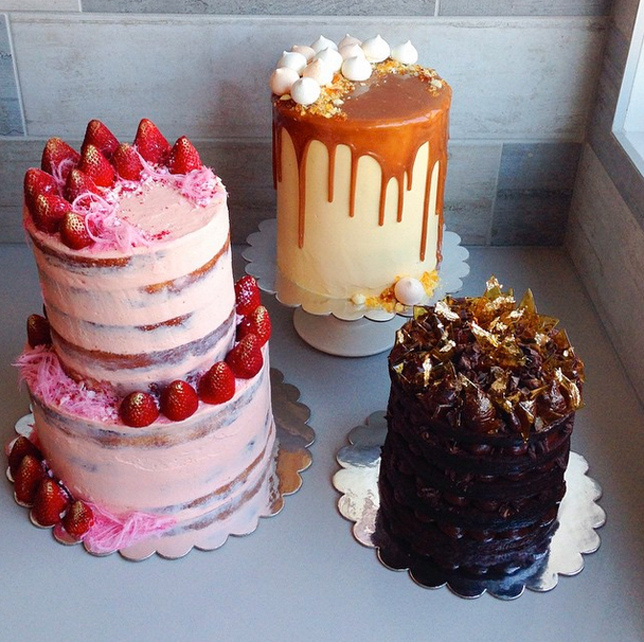
Modelling technique 6: Quick-fire modelling
Modelling is most effective when it is accompanied by quick-fire questions. As you are demonstrating a process, you should continually ask your students about what you are doing and why you are doing it.
For example, a PE teacher demonstrating how to throw a javelin might ask their teachers questions like: “How am I gripping the javelin? Why am I gripping it like this? How should I do my run-up? Why did I move my front leg like that?”.
Another way to use quick-fire modelling is to ask one of your students to model a task so that you can ask the rest of the class quick-fire questions on what they are doing and why.

Modelling technique 7: Language modelling
Modelling is broader than just demonstrating a task. You are the students’ model for how to speak and use language, and it’s important to discuss your expectations about language with your students.
You should think about your own use of language and subject-specific vocabulary. You should also scaffold and explain to your students how you expect them to speak.
For example, you might model answering a question, and then say: “You might notice that I spoke in full sentences, used specific facts, and gave clear reasons”. During a discussion, you might prompt your students: “Could you develop that? Could you say that again in a full sentence?”.
If formal, technical spoken language isn’t your strong point, share your own process of noticing and correcting your language. For example, a PE teacher might say: “Hit the ball over there. No, let me use the cricketing terms. Drive the ball through the off-side.”.

Modelling technique 8: Feedback modelling
It can be very helpful for students to compare their own finished work with a prepared model. They might compare an answer to an exam question with a good example, or in a practical subject they might compare their model bridge to the teacher model. In a performance subject (like drama), you could use video clips.
This approach provides rich and detailed feedback, which can be more useful than written comments (and more time-efficient for you!). Your students should compare their work with the model, and then edit and improve their own work. You could also use the model to provide scaffolding as a student is working on their own work.

Modelling technique 9: Metacognitive modelling
It is absolutely essential not to assume prior knowledge, as discussed in Step 1: Prior Knowledge. Research shows that students vary enormously in how much prior knowledge they bring to a topic.
This principle also extends to the entire learning journey. We shouldn’t assume prior knowledge in areas such as proofreading, using a worksheet, note-taking, and so on. The more we can clearly explain and model every step of the learning process, the more our students will be able to learn.
We can do this by focusing on metacognitive skills. You might discuss how your students should organise themselves, how to use planning, or how to evaluate their work. You should also spend time discussing how to approach exam questions and exam technique.

Modelling technique 10: Archiving modelling
We can see ourselves as archivists as well as teachers, noticing and storing excellent examples of work. This might include teacher models, past-student models, and expert models. This archive gives us an invaluable source to draw on with our students.
We can use our archive in a number of ways. We might take photos of work and store them in a shared folder with our department. We might create yearly anthologies or exhibitions to celebrate excellent work. We might create displays of work in our classroom. We might use departmental meetings to share and compare work.

Warning
Modelling is a highly effective method, but it can be restrictive if it is used clumsily. Here are three pitfalls and how to avoid them.

- Don’t restrict creativity. Multiple modelling is a great way to inspire students of different abilities. It also shows students that there is more than one approach to the task, so that they are still able to think creatively.
. - Don’t let students copy the model. Make sure you set a different task to the model task. You could also get your students to plan their work before seeing and discussing the model.
. - Don’t overdo it. Spend time on teaching and reinforcing the new knowledge, and give plenty of opportunities for independent practice. Models and scaffolds are invaluable tools, but it’s important to allow our students space to make mistakes too.
What does the research say?
The evidence shows that worked examples are a highly effective method. Research shows us that modelling in small chunks, followed by focused practice, is particularly effective.
This is partly because it breaks down complicated tasks and gives opportunities for making strong links. It also gives students a clear goal. Finally, modelling has a behavioural element. If we model calmness, respect, and a growth mindset, our students will respond to this and aim high.
Modelling/ worked examples appears in research such as John Hattie’s work, Barak Rosenshine’s book, and Allison and Tharby’s book. The Institute for Educational Sciences recommend “interweaving worked example solutions with problem-solving exercises”, and the Khan Academy offer worked examples as the core of their approach.
Here is a clip of John Hattie talking about worked examples (modelling). He argues that no one would try to teach abseiling without demonstrating first. (This clip starts 1m 24 into the second of two videos of Hattie presenting evidence.)
Image credits
Header image: http://www.lawteched.com/modeling-in-teaching/
Image of students at desks: http://www.alcuaderno.com/articulos/
Image of 10 ideas: http://www.haiki.es/2016/11/10-ideas-para-tener-un-buen-blog/
Live modelling image: https://pt.slideshare.net/MarkEnser/live-modelling
Prepared modelling image: https://www.inc.com/tom-searcy/the-power-of-one-word-to-change-your-life.html
Shared modelling image: http://www.lawteched.com/modeling-in-teaching/
Expert modelling image: https://www.pinterest.co.uk/pin/381609768398844286/
Multiple modelling image: http://cococakeland.com/life/sugar-crush-coco-cake-land-meets-katherine-sabbath/
Quick-fire modelling image: https://michaelhyatt.com/asking-more-powerful-questions.html
Language modelling image: https://passionatelifee.wordpress.com/
Feedback modelling image: https://www.avira.com/en/avira-feedback-community
Metacognitive modelling image: https://www.edutopia.org/blog/8-pathways-metacognition-in-classroom-marilyn-price-mitchell
Archiving modelling image: https://ncrcl.wordpress.com/2015/12/14/call-for-papers-archiving-childhood-the-3rd-ncrcl-conference/
Don’t do this image: http://ts24.com/index.php/traveling/